
EU Right to Free Movement: Complete Guide for Pakistani Europeans 2026
Comprehensive guide to EU free movement rights for Pakistani Europeans. Learn about residence permits, work rights, healthcare access, family reunification, and how to navigate the EU immigration system as a Pakistani national living in Europe.
The EU Right to Free Movement represents one of the most powerful legal frameworks available to Pakistani citizens who have family ties to European Union nationals. Whether your spouse holds a German passport, your parent is a French citizen, or your child has naturalized in the Netherlands, the Free Movement Directive 2004/38/EC grants you rights that go far beyond what standard immigration law offers. This comprehensive guide covers every aspect of EU free movement rights for Pakistani Europeans in 2026, from initial residence permits to healthcare access, work rights, family reunification, and cross-border travel.
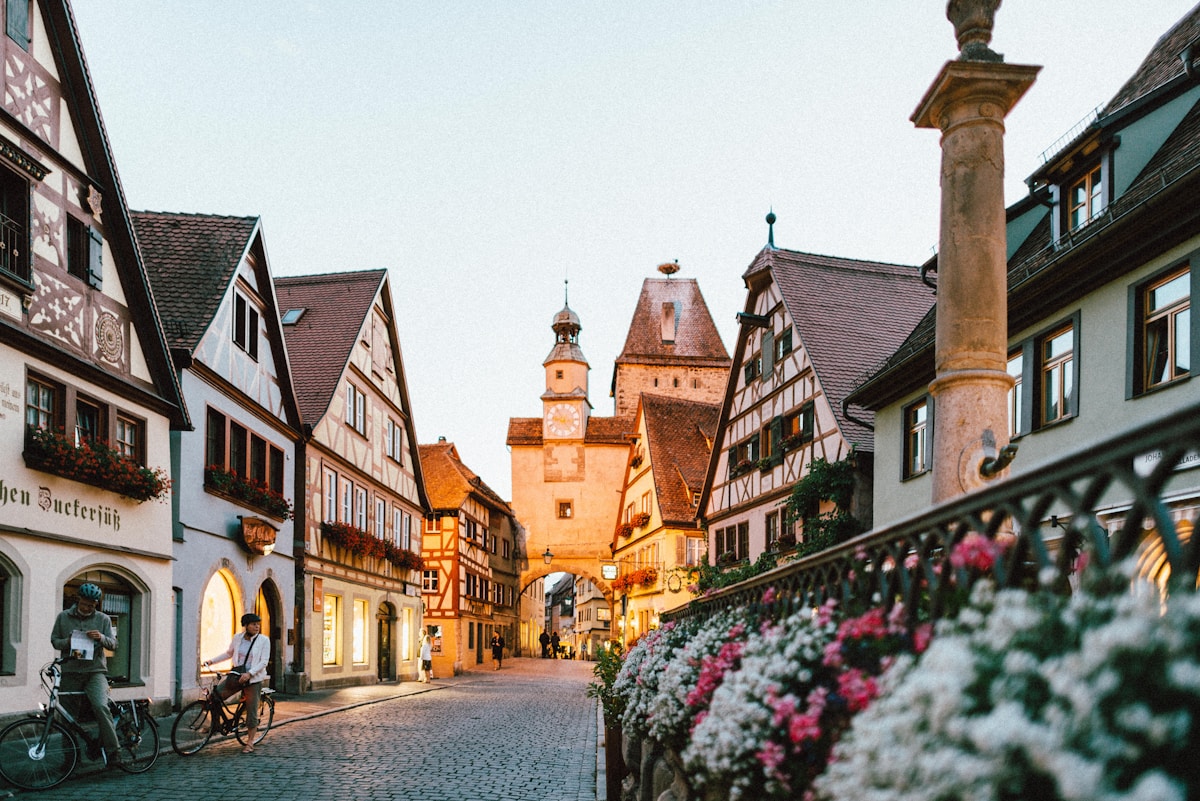
Pakistani Europeans navigating their rights under the EU free movement framework
Understanding the Legal Foundation
The cornerstone of EU free movement rights is Directive 2004/38/EC, adopted by the European Parliament and Council on April 29, 2004. This directive consolidates and replaces earlier legislation governing the right of EU citizens to move and reside freely within the territory of the Member States. Crucially, it extends protections to third-country national family members, including Pakistani citizens who are married to or descended from EU nationals.
For Pakistani families, the significance of this directive cannot be overstated. Unlike the standard family reunion visa process, which subjects applicants to language tests, specific income thresholds, and lengthy processing times, the free movement route provides a more streamlined pathway with fewer restrictions and stronger legal protections.
The directive establishes several key principles that directly affect Pakistani Europeans: the right to reside in any EU member state, the automatic right to work without a separate permit, access to healthcare and social services on equal terms with nationals, and robust protection against expulsion. These rights accrue automatically when an EU citizen exercises their right to free movement, and they extend to their third-country national family members.
Who Qualifies for Free Movement Rights?
Under Article 2 of Directive 2004/38/EC, "family members" of EU citizens include:
- The spouse — Pakistani citizens legally married to an EU national
- Direct descendants under 21 — Children (including stepchildren and adopted children) of the EU citizen or their spouse who are under 21 years of age
- Dependent direct relatives in the ascending line — Parents, grandparents, or other ancestors who are financially dependent on the EU citizen or their spouse
- Dependent direct relatives in the descending line — Children over 21 who are financially dependent on the EU citizen
Additionally, Article 3(2) provides that Member States must facilitate entry and residence for "other family members" who are dependents of the EU citizen, or who live with the EU citizen in the host country, or who have serious health grounds requiring their personal care by the EU citizen. This broader category can include Pakistani siblings, aunts, uncles, and other extended family members in certain circumstances.
Critical Distinction for Pakistani Applicants
The Free Movement Residence Card
Article 10 of Directive 2004/38/EC requires Member States to issue a residence card to third-country national family members who are accompanying or joining an EU citizen. This card is the physical proof of your right to live and work in the EU. For Pakistani citizens, obtaining this card is a critical step after arriving in Europe.
The residence card must be valid for five years from the date of issue and is renewable automatically. It must bear the words "family member of a Union citizen" to clearly indicate the holder's status. The card cannot contain any reference to a specific member state, which means it is valid across the entire EU, not just in the country where it was issued.
For a detailed, step-by-step walkthrough of the application process, see our EU Free Movement Residence Card Application Guide for Pakistanis. This guide covers country-specific requirements in Germany, France, the Netherlands, Italy, Spain, and Belgium, along with the documents you need and typical processing times.

The EU residence card is your key document for living and working in Europe
Residence Rights: How Long Can You Stay?
The directive establishes a tiered system of residence rights that applies to Pakistani family members of EU citizens:
Up to Three Months (Article 6)
For the first three months, EU citizens and their family members have the right to reside in another Member State without any conditions other than possessing a valid identity document or passport. Third-country national family members, including Pakistani citizens, must also be in possession of a valid passport and, if required, an entry visa. During this initial period, you do not need to demonstrate employment, sufficient resources, or health insurance.
More Than Three Months (Article 7)
After three months, the EU citizen must demonstrate one of the following to maintain the right of residence: employment or self-employment in the host country; possession of sufficient resources for themselves and their family members, together with comprehensive health insurance coverage; or enrollment as a student with sufficient resources and comprehensive health insurance. As a family member, your right of residence continues as long as the EU citizen maintains their own right of residence.
The concept of "sufficient resources" is interpreted differently by each Member State. Some countries apply the social assistance level as a benchmark, while others use different formulas. Importantly, the EU Court of Justice has held that the test is whether the person has resources that are "sufficient" in nature, meaning they are regular, stable, and adequate to cover living expenses without resorting to the host country's social assistance system.
Permanent Residence (Article 16)
After five years of continuous legal residence, you acquire the right of permanent residence. This is a significant milestone for Pakistani Europeans, as permanent residence provides nearly equal treatment to EU nationals and cannot be lost except through extended absences from the EU. For more details on this pathway, see our guide to EU Permanent Residence: The 5-Year Pathway for Family Members.
Work Rights Across the EU
One of the most significant advantages of the free movement route is the automatic right to work. Unlike family reunion residence permits, which may restrict employment or require separate work authorization depending on the country, the free movement residence card grants you the unrestricted right to seek and accept employment in any EU member state.
This means Pakistani Europeans with free movement residence cards can:
- Work in any occupation — There are no restrictions on the type of work you can perform
- Work in any EU country — Your work rights extend across all 27 EU member states
- Be self-employed — You can start a business or work as a freelancer
- Change employers freely — No need for employer-sponsored work permits
- Access the same labor market — You cannot be treated differently from nationals in terms of employment conditions
However, if you move to a different EU country than the one where your residence card was issued, you must register your residence in the new country within three months. The new country must then issue you a new residence card, but it cannot impose additional conditions beyond those required for the EU citizen whose family member you are.
Healthcare Access for Pakistani Europeans
Healthcare access is a major concern for Pakistani families moving to Europe. Under the free movement framework, your access to healthcare depends on your employment status and the country of residence:
If You Are Employed
If you are employed or self-employed in an EU country, you are covered by that country's social security system, including healthcare. You will receive a European Health Insurance Card (EHIC) or equivalent, which provides coverage for necessary healthcare during temporary stays in other EU countries.
If You Are Not Employed
If you are not employed but your EU citizen family member is, you are covered under their social security status as a dependent family member. If neither you nor your EU citizen family member is employed, you must have comprehensive health insurance covering yourself and your family members for the entire period of residence.
Healthcare Tip for Pakistani Families
Family Reunification Under Free Movement Rules
While the free movement route primarily benefits the immediate family members of EU citizens (spouse, children under 21, and dependent relatives), there are also provisions for extended family reunification. Article 3(2) of the directive requires Member States to "facilitate" entry and residence for other family members who are dependents of the EU citizen.
This "facilitation" provision has been interpreted by the EU Court of Justice as requiring Member States to consider factors such as:
- The applicant's personal relationship with the EU citizen
- Whether the applicant is dependent on the EU citizen for financial support
- Whether the applicant has lived with the EU citizen in the host country
- Whether there are serious health grounds requiring the applicant's presence
For Pakistani families seeking to bring extended family members such as parents, siblings, or adult children, this facilitation provision can be a valuable pathway. However, the requirements vary significantly between Member States, and some countries are more generous than others. For a comprehensive overview of family reunification options, see our Family Reunion Visa Europe 2026: Complete Guide for Pakistanis.
Cross-Border Travel Within the EU
As a Pakistani European with a valid free movement residence card, you enjoy extensive travel rights within the EU. The Schengen Agreement, which most EU member states participate in, allows you to travel freely across internal borders without passport controls.
Key travel rights include:
- Unrestricted travel within the Schengen area for up to 90 days within any 180-day period
- No visa requirements for visiting other Schengen countries
- Right to transit through non-Schengen EU countries
- Accompanying your EU citizen family member when they exercise their free movement rights in another Member State
When traveling to the EU for the first time, book your flights through Kiwi.com for competitive prices, arrange temporary accommodation via Booking.com, and get travel insurance from SafetyWing. For eSIM connectivity during your travels, Airalo provides affordable data plans that work across multiple European countries.
Protection Against Expulsion
Article 15 of Directive 2004/38/EC provides strong protection against expulsion for Pakistani family members of EU citizens. An expulsion measure may only be taken if there are serious grounds of public policy or public security. This is a higher threshold than the standard immigration law grounds for expulsion, giving Pakistani Europeans significantly more security than other third-country nationals.
Additionally, the following protections apply:
- Proportionality: Any expulsion measure must be proportionate to the legitimate aim pursued
- Personal conduct: Past criminal convictions alone are not sufficient grounds for expulsion
- Right to be heard: You have the right to be heard before any expulsion measure is taken
- Notification: You must be informed in writing of the expulsion decision and the grounds
- Right to appeal: You have the right to appeal against an expulsion decision
Step-by-Step Process: Exercising Your Free Movement Rights
For Pakistani citizens who are ready to exercise their free movement rights, here is a step-by-step overview of the process. For more detailed guidance, see our step-by-step guide on exercising free movement rights.
- Confirm eligibility — Verify that your family member is an EU citizen and that you qualify as a family member under the directive
- Gather documents — Collect your passport, marriage certificate (or proof of family relationship), and your family member's proof of EU citizenship
- Travel to the EU — Enter the EU using your valid passport. If a visa is required, apply for a free movement visa (not a standard Schengen visa)
- Register your residence — Within three months of arrival, register with the local authorities and apply for your residence card
- Apply for the residence card — Submit your application for the free movement residence card at the local immigration office
- Receive your card — Collect your residence card, valid for five years
- Set up your life — Open a bank account, enroll in language courses, connect with the Pakistani community, and begin building your new life in Europe
Country-Specific Considerations
While the directive provides a harmonized framework, the practical implementation varies between Member States. Here are key considerations for the most popular destinations for Pakistani families:
| Country | Residence Card Name | Application Deadline | Processing Time |
|---|---|---|---|
| Germany | Aufenthaltserlaubnis | Within 2 weeks | 4-8 weeks |
| France | Carte de sejour | Within 3 months | 4-8 weeks |
| Netherlands | Verblijfsvergunning | Within 3 months | 2-4 weeks |
| Italy | Permesso di soggiorno | Within 8 days | 2-3 months |
| Spain | Tarjeta de residencia | Within 1 month | 1-3 months |
Social Security and Benefits Access
Pakistani Europeans exercising free movement rights are entitled to access social security benefits on equal terms with nationals of the host country, subject to the applicable conditions. This includes:
- Unemployment benefits — If you become unemployed while employed or self-employed in the host country
- Family benefits — Child allowances and other family-related benefits
- Healthcare coverage — Access to the national healthcare system
- Education benefits — Access to education on equal terms with nationals, including reduced tuition fees in some countries
- Pension rights — Accrued pension rights are portable across EU member states
The coordination of social security systems across EU countries is governed by Regulation (EC) No 883/2004. This regulation ensures that Pakistani Europeans do not lose social security benefits when moving between EU countries and that periods of insurance, employment, and residence in different countries are taken into account.
Common Challenges and How to Overcome Them
Pakistani Europeans exercising free movement rights often encounter practical challenges. Here are the most common issues and how to address them:
Language Barriers
While the free movement route does not require a language certificate, practical integration into your new country requires communication skills. Unlike the standard family reunion process, which mandates A1 or A2 language certificates, free movement applicants can focus on practical language learning without the pressure of passing an official exam.
Document Authentication
Even though the free movement route is less document-intensive than family reunion, you still need properly authenticated documents. Your marriage certificate should be apostilled, and you may need certified translations into the official language of the host country.
Administrative Delays
Despite the directive's clear provisions, some Member States impose bureaucratic hurdles. Long waiting times for appointments, unclear procedures, and inconsistent application of the rules can be frustrating. To mitigate these issues, begin your application process early, keep copies of all documents, and know your rights under the directive.
Path to EU Citizenship
After holding permanent residence for a sufficient period, Pakistani Europeans may be eligible for naturalization in their host country. The requirements vary by country but typically include:
- Residence period: Usually 5-8 years of legal residence
- Language proficiency: Typically B1 or B2 level in the official language
- Civics test: Knowledge of the country's history, politics, and society
- Financial stability: Evidence of steady income and no reliance on social assistance
- Clean criminal record: No serious criminal convictions
Obtaining EU citizenship through naturalization provides the ultimate security for Pakistani Europeans, granting you all the rights of an EU citizen, including the right to live and work in any EU country without restrictions.
Frequently Asked Questions
Q: Can I travel to Pakistan and return to the EU with my free movement residence card?
A: Yes, your free movement residence card allows you to travel to Pakistan and return to the EU. However, if your card was issued by a specific Member State, you should check whether a visa is required for re-entry. Some Pakistani citizens may need a visa to re-enter the Schengen area even with a valid residence card, depending on the issuing country.
Q: What happens to my residence rights if my EU citizen spouse dies?
A: Under Article 13(2) of the directive, if your EU citizen spouse dies before you have acquired permanent residence, you retain the right of residence if you lived with the EU citizen for at least one year immediately before their death, provided the EU citizen had a right of permanent residence at the time of death or would have had if they were still alive.
Q: Can I work in a different EU country than the one where my residence card was issued?
A: Yes, you have the right to work in any EU country. However, if you move to a different country, you must register your residence there within three months and apply for a new residence card from that country.
Q: How long does it take to process the free movement residence card?
A: Processing times vary by country and local office. Generally, expect 2-8 weeks. Check our processing time tracker for current estimates in your specific country. Germany typically takes 4-8 weeks, France takes 4-8 weeks, the Netherlands takes 2-4 weeks, and Italy takes 2-3 months. Applying during off-peak months can help speed up the process.
Additional Resources
for more detailed guidance on specific aspects of EU free movement rights and family reunification topics, explore our comprehensive collection of in-depth guides and practical resources specifically designed to help Pakistani Europeans navigate every step of the immigration and settlement process successfully.
Cost Summary
| Expense | Estimated Cost |
|---|---|
| Residence card application | EUR 0-225 (varies by country) |
| Document attestation and apostille | EUR 50-150 |
| Certified translations | EUR 30-100 |
| Health insurance (initial period) | EUR 50-150/month |
| Flight tickets (Pakistan to EU) | EUR 400-800 |
Use our visa cost calculator to get a personalized estimate of your total costs.
Related Guides
Related Guides
Book Smarter, Travel Better
Maximize Your Approval Chances
Visa Lab Profile Audit
Check your visa approval score before applying
Visa Cost Calculator
Calculate total visa costs including fees, insurance & extras
Processing Time Checker
Check current processing times for your destination
Recovery Recovery Tool
Get a recovery plan if your visa was refused
Visa-Free Explorer
Find countries you can visit without a visa
Travel Itinerary Planner
Plan your trip with day-by-day itineraries
Related Blog Posts
Check Your Visa Approval Score
Use our free Make Sense Visa Lab tools to audit your profile, calculate costs, and maximize your approval chances.
Book Smarter, Travel Better
Flights, eSIM data plans & activities — all curated for Pakistani travelers heading abroad.
Search & Book
Compare and book affordable flights from Pakistan to 700+ airlines worldwide.
Stay Connected
Instant eSIM data plans for 190+ countries. No physical SIM needed.
Tours & Attractions
Book tours, theme parks, city passes & local experiences worldwide.